
Tagile AB
Translating a high-level vision for an AI-native B2B communication tool into a structured, market-ready MVP.
DESIGNED FOR CLARITY • B2B SAAS • AI NATIVE • DESIGNED FOR CLARITY • B2B SAAS • AI NATIVE •
DESIGNED FOR CLARITY • B2B SAAS • AI NATIVE • DESIGNED FOR CLARITY • B2B SAAS • AI NATIVE •
My Role
Lead Product Designer &
Business Developer
Methods
Product Strategy, Market Analysis, Wireframing, Prototyping, UX/UI Design
Tools
Figma
When I joined Tagile, the environment was highly reactive, and the initial directive was simply to "add more AI features" to the dashboard. However, as a designer with a business development background, I knew that stacking complex AI on top of a broken foundation would lead to user churn.
The Challenge:
When I joined Tagile, the environment was highly reactive, and the initial directive was simply to ”add more AI features” to the dashboard. However, as a designer with a business development background, I knew that stacking complex AI on top of a broken foundation would lead to user churn.
Discovery & Research
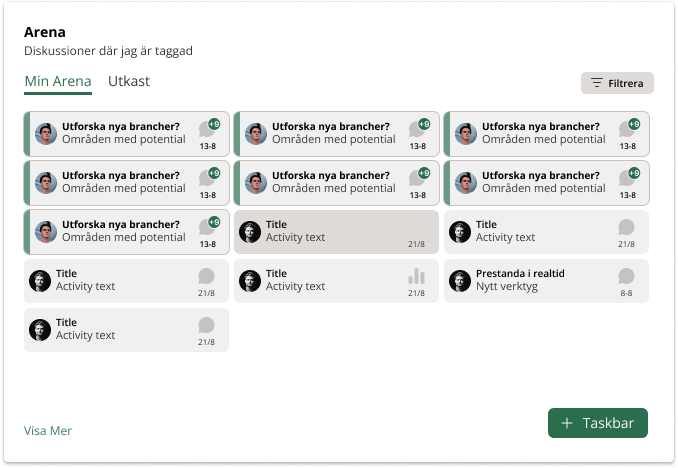
Before designing new features, I took ownership of the product direction by conducting a comprehensive UX audit of the existing platform.
Audit Findings:
Fragmented Navigation: User flows were broken, leading to high friction in task completion.
Poor Visual Hierarchy: The UI was non-competitive, flat, and cluttered with actions competing for attention.
Confusing UX Writing: Buttons and labels lacked clarity, making the product goals nearly impossible for new users to understand.
Building the Foundation First
I had to manage stakeholder expectations and advocate for a strategic pivot. My core realization was this: Tagile didn’t need more features—it needed a solid, clear structure to build on.
I successfully shifted the project goal from "Adding AI Features" to "Building a Usable Foundation".
Execution & High-Fidelity Design
With leadership aligned, I acted as both Product Lead and Lead UI Designer to engineer the new MVP from the ground up.
Information Architecture & Flow:
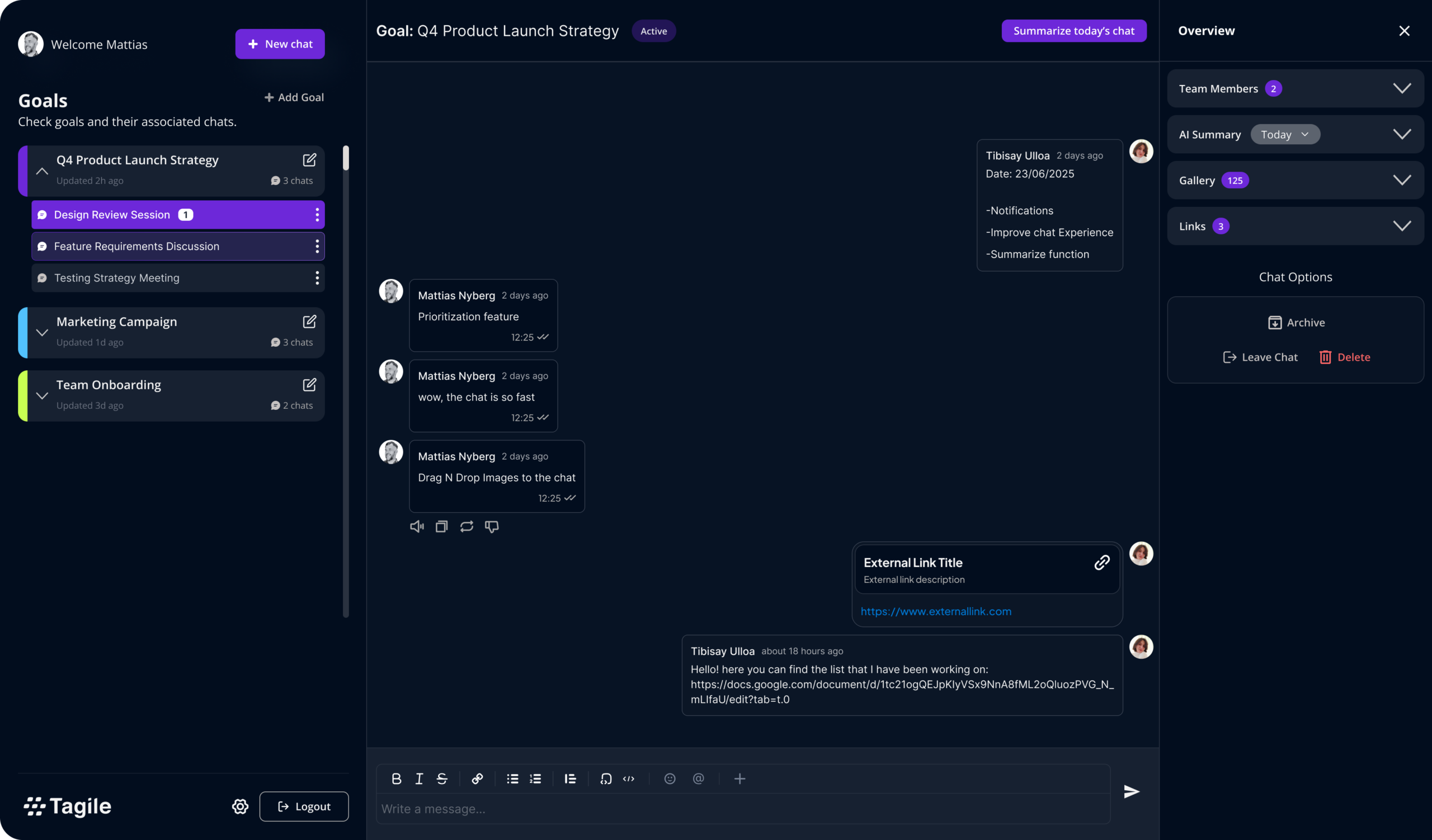
I redesigned the core navigation paths. I moved the platform from a fragmented, confusing state into a centralized, logical hierarchy: Dashboard → Projects → Chats → Goals → AI Assistant .
The Dashboard Redesign
To position Tagile as a premium B2B SaaS tool, I developed a sophisticated dark-mode design system.
Reduced Cognitive Load: I cleaned up the components and layout to ensure consistency over complexity.
Contextual AI: Instead of overwhelming the user, the AI chat and summarization features were elegantly integrated into a contextual right-hand sidebar.
Outcomes & Learnings
Design Impact:
Rapid MVP Launch: Engineered and launched a showcase-ready MVP in just 4 months, successfully converting complex business requirements into scalable, high-fidelity UI.
Investor-Ready Clarity: By establishing a dual-mode design system and restructuring the user flows, the new platform successfully clarified Tagile’s value proposition, directly supporting the startup’s pitch to global investors and high-value B2B clients.
Key Takeaway:
Proactive Leadership Over Reactive Tasking: This project was a masterclass in stepping up. I transformed my role from simply executing requested tasks to leading discovery sessions and identifying strategic content gaps. It taught me how to push back on feature bloat and align design decisions with actual business goals.
Clarity Before Complexity: The biggest lesson was that ”adding AI” is not a product strategy. Before integrating advanced technology, a product must first have a solid, usable foundation. Reducing user noise and cognitive workload is just as critical as visual polish.
Addressing a critical social issue: parental loneliness.
Discover mobile experience that reduced the cognitive load of scheduling while fostering a safe, trusted community.